
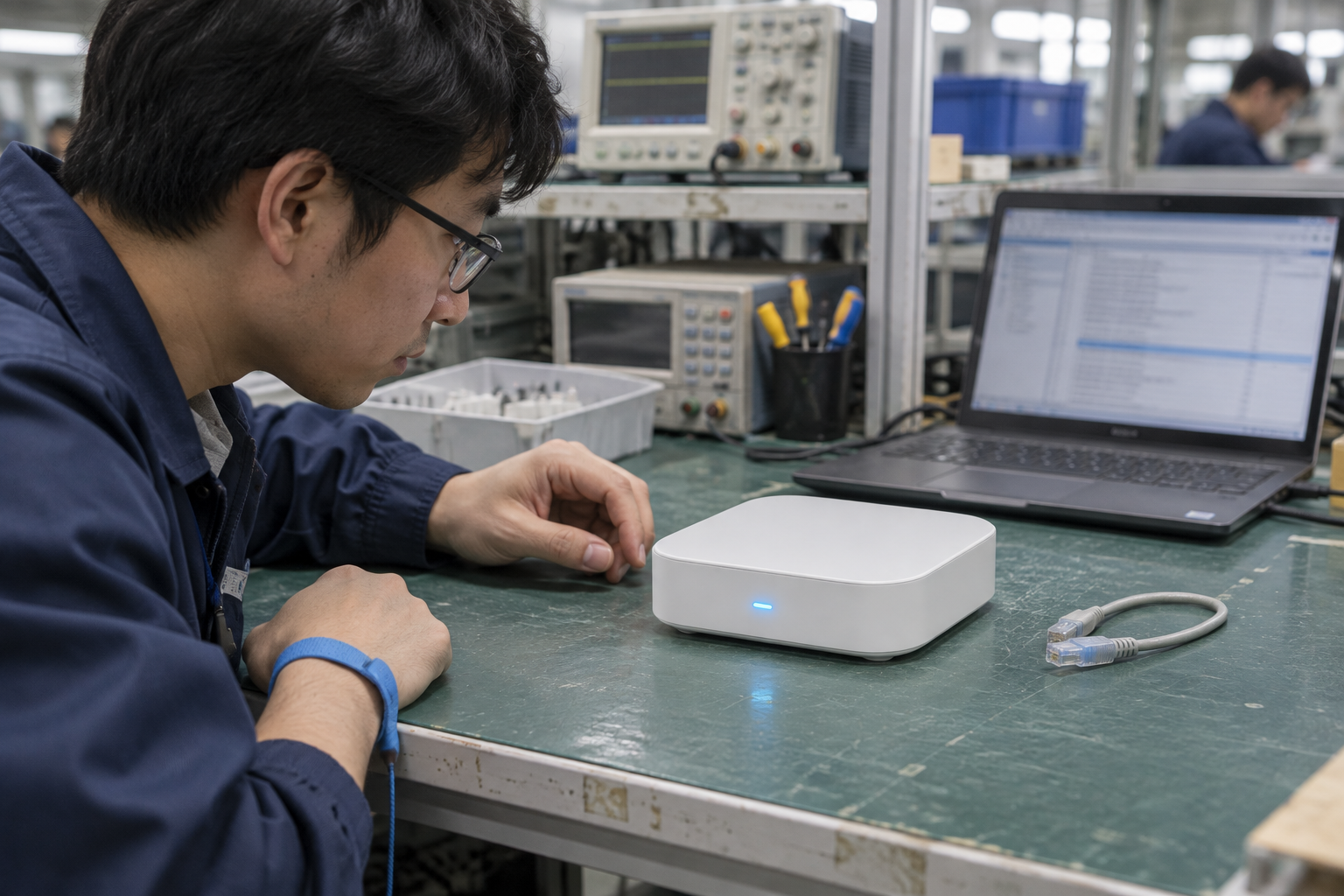
Electrical behaviour
Assess power supply, control signals and electrical interface behaviour.
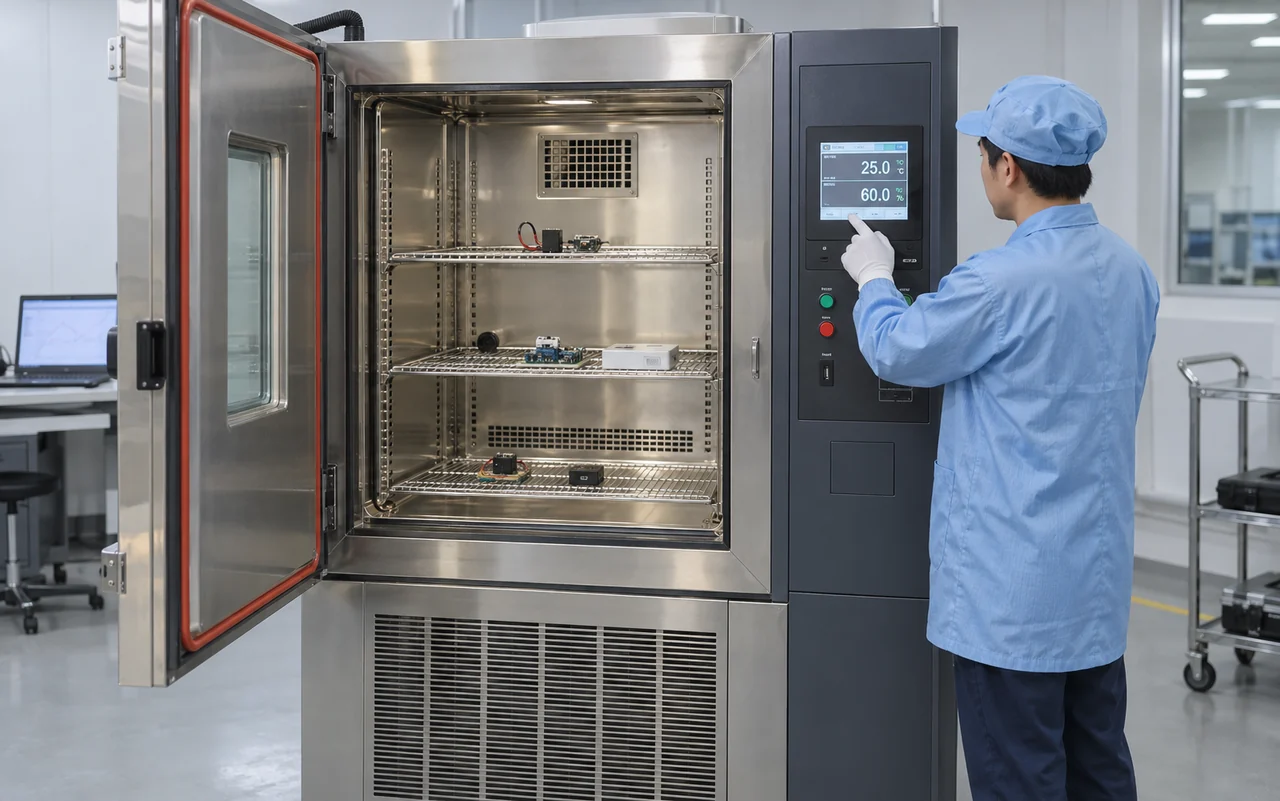
Evaluate product behaviour from multiple aspects to match the application and market requirements.
Assess power supply, control signals and electrical interface behaviour.

Evaluate product performance under different environmental conditions.
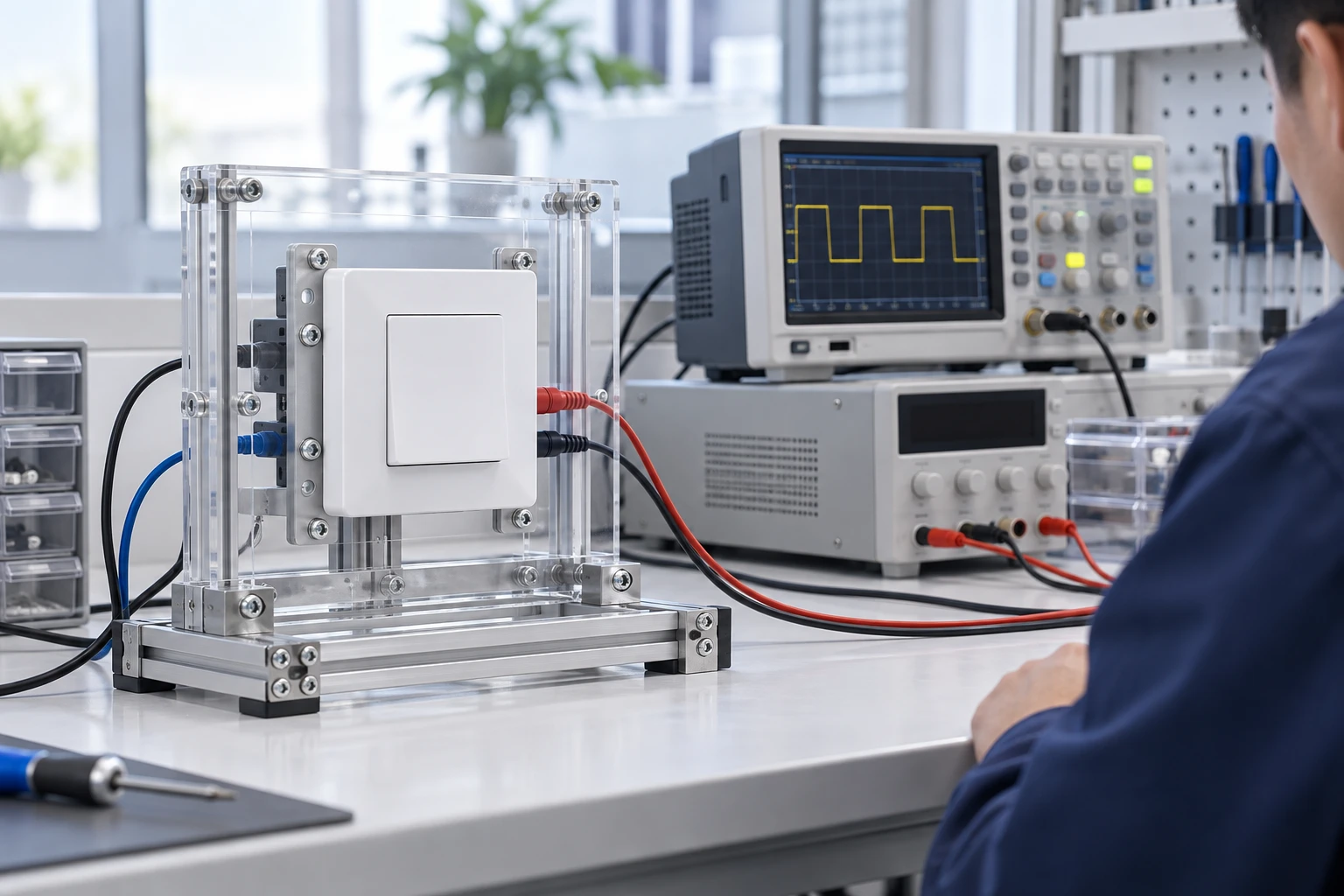
Review mechanical structure, button operation and repeated use.
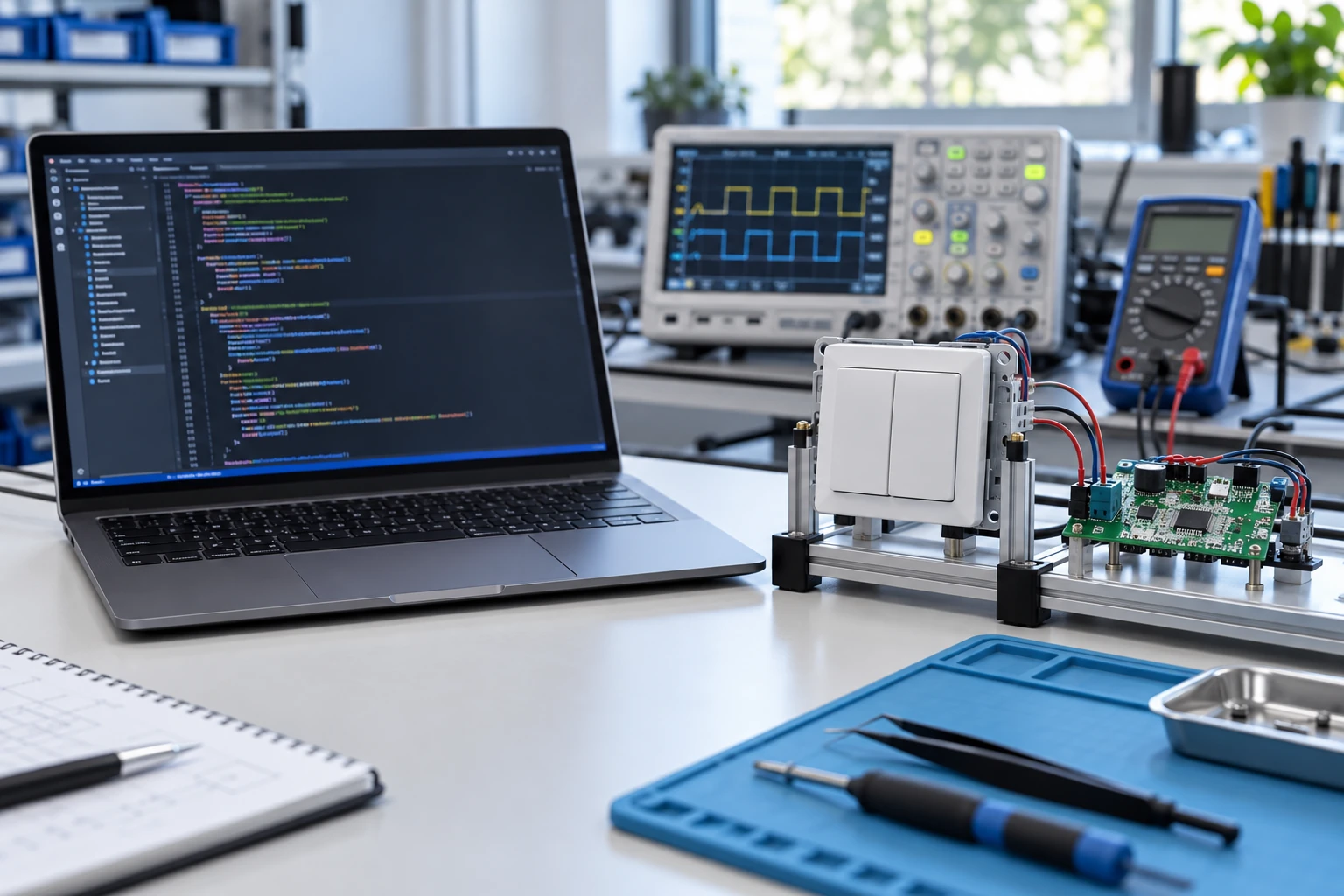
Evaluate communication, pairing and system interaction.
Define a clear test plan based on the product configuration and intended use.
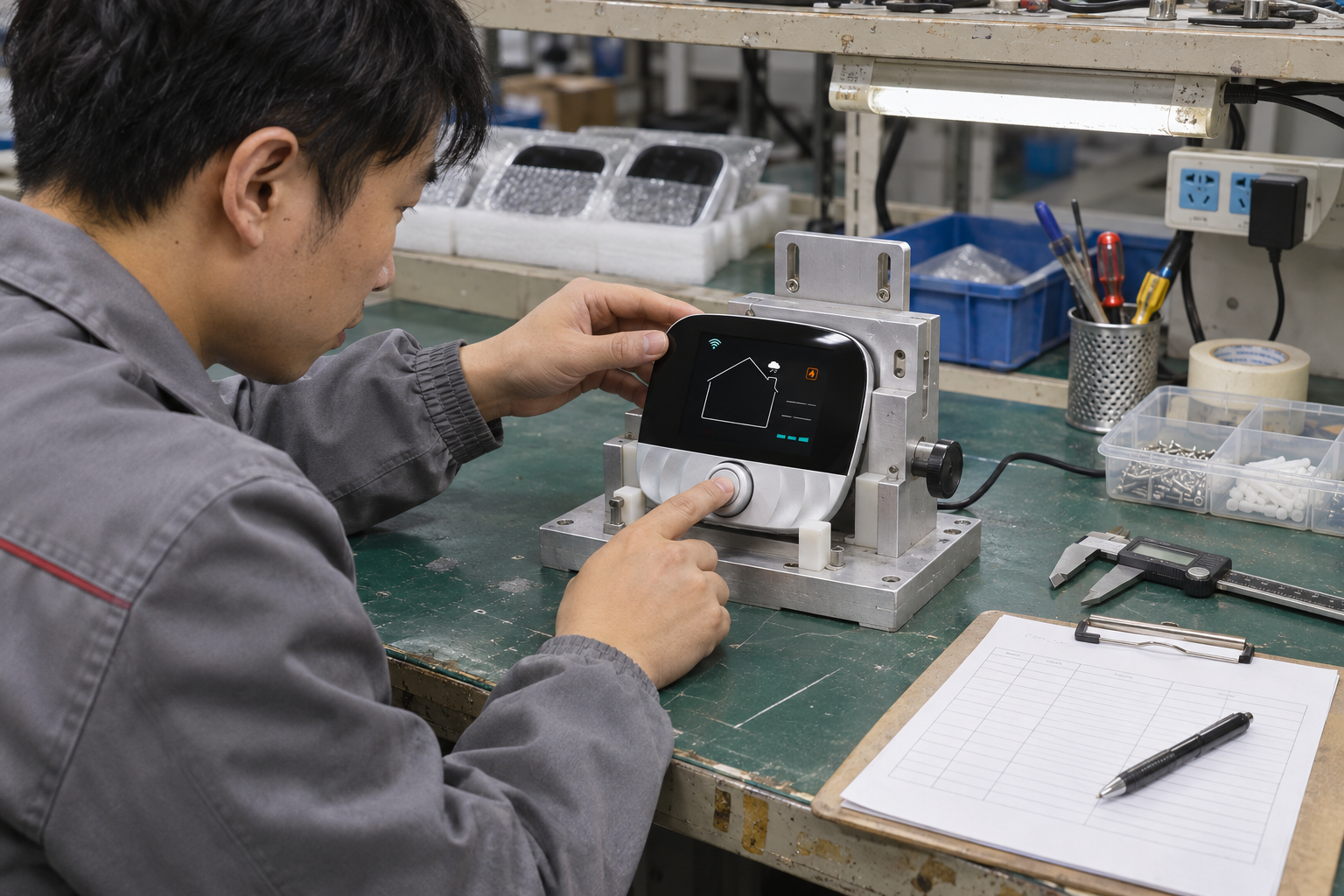
| Test area | Purpose | Record |
|---|---|---|
| Function | Verify main functions and user scenarios. | Test records and observations |
| Environment | Evaluate performance under defined conditions. | Environmental test records |
| Mechanical | Check structure and operation behaviour. | Operation records and observations |
| Communication | Review networking and system interaction. | Communication test records |
| Review area | Required information |
|---|---|
| Product model | Square wall switch, scene panel, thermostat or related control PCB. |
| Hardware and firmware revision | Specify the sample version for testing. |
| Intended use | Application scenarios and installation environment. |
| Evaluation criteria | Key functions and behaviour to be assessed during testing. |
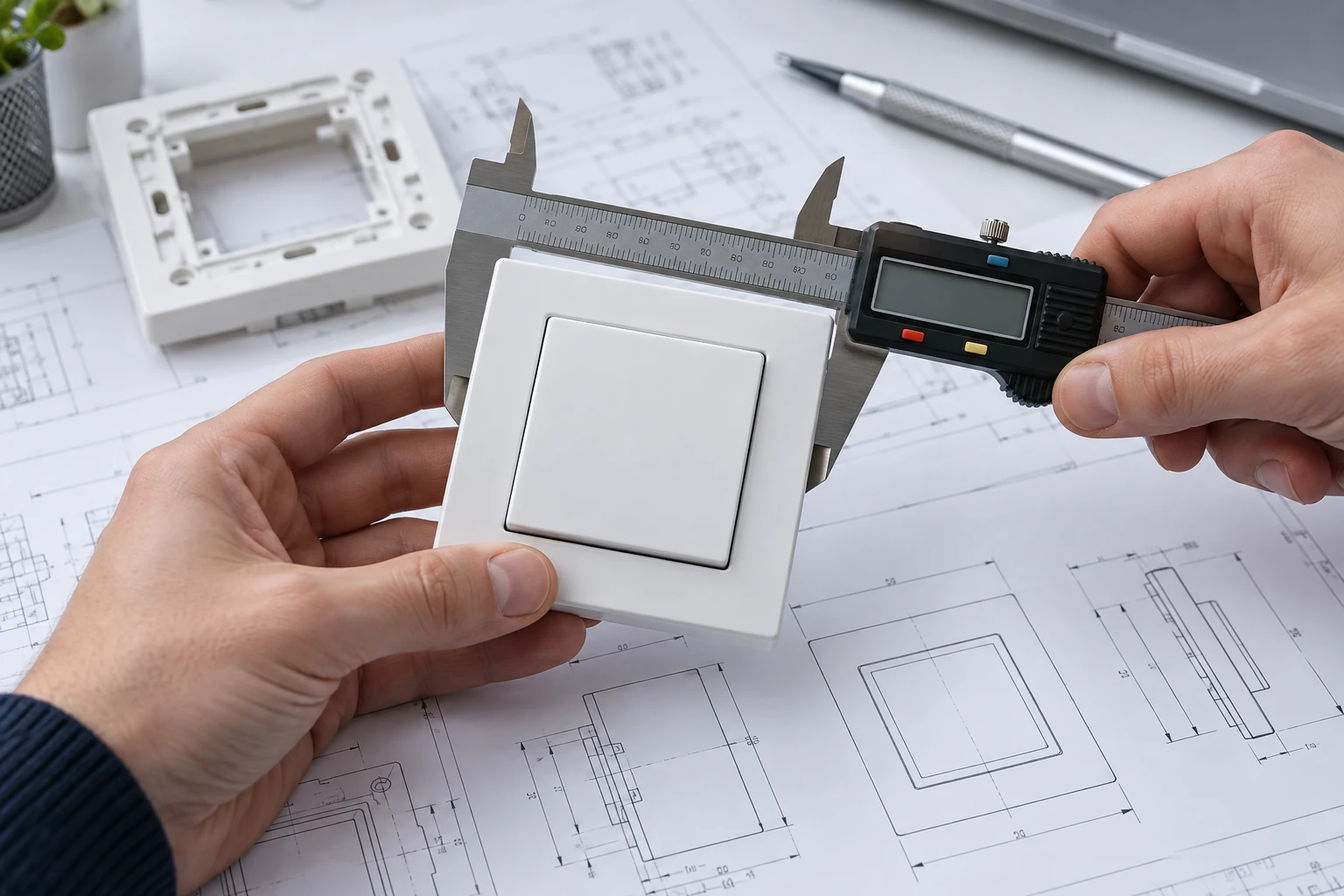
Set up suitable fixtures, instruments and environmental conditions for repeatable evaluation.
Use fixtures that match the product structure and test purpose.
Prepare and calibrate measurement equipment before testing.
Configure environmental and application conditions as required by the test plan.
Follow operating procedures for sample installation, connection and test operation.
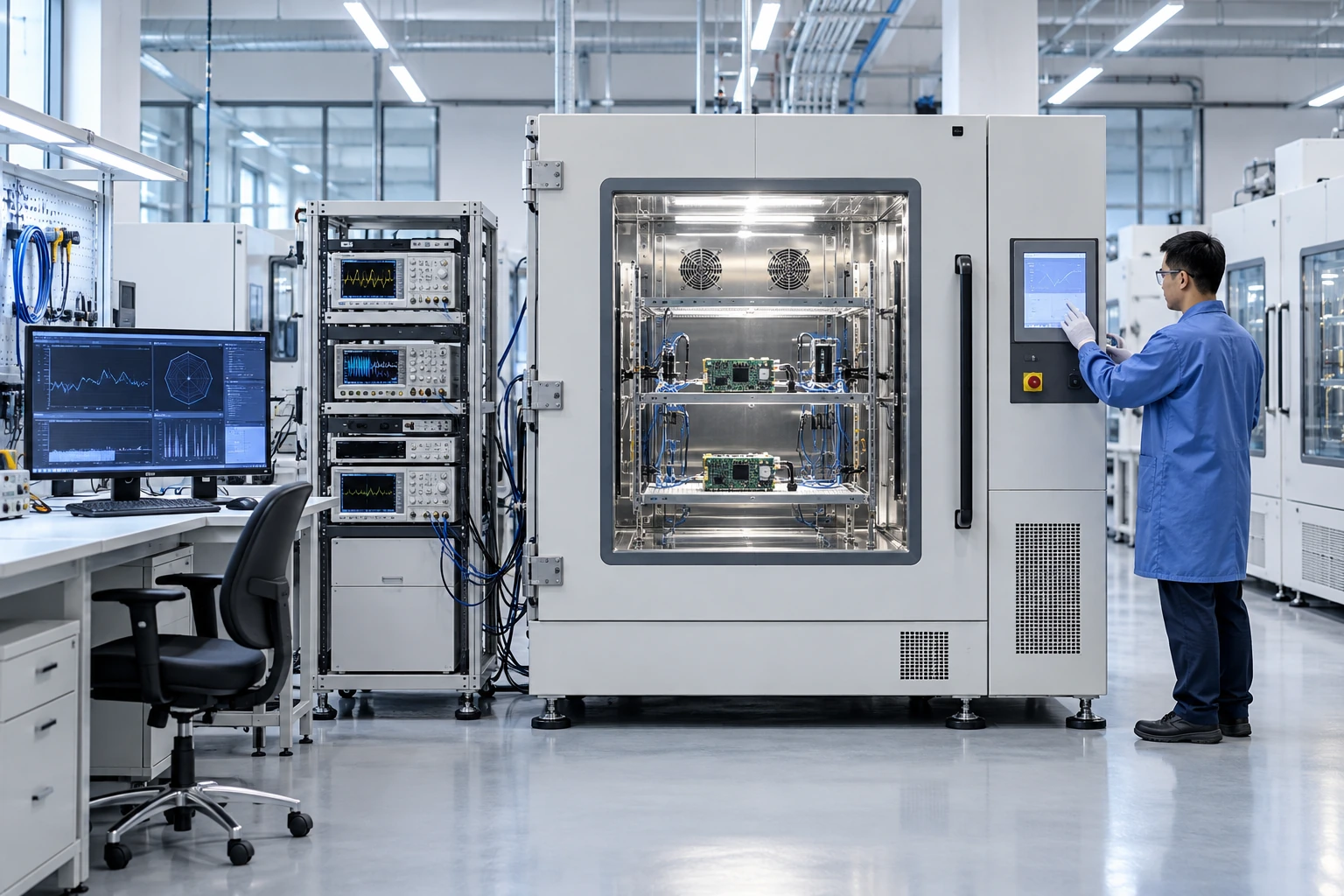
Evaluate product behaviour across normal operation, repeated operation, changed conditions and recovery.
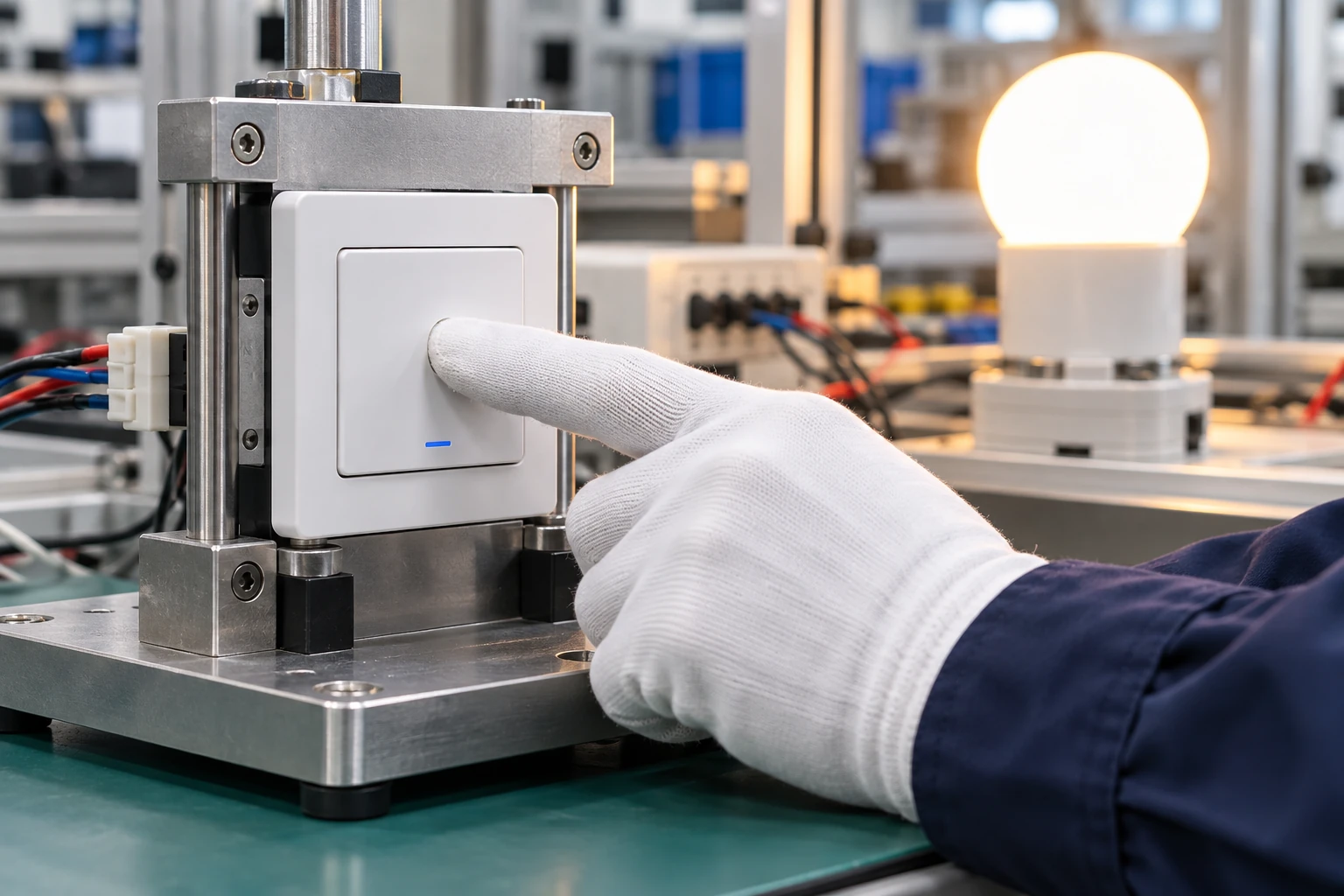
Check core functions and typical user operations.
Evaluate behaviour under continuous or repeated operation.
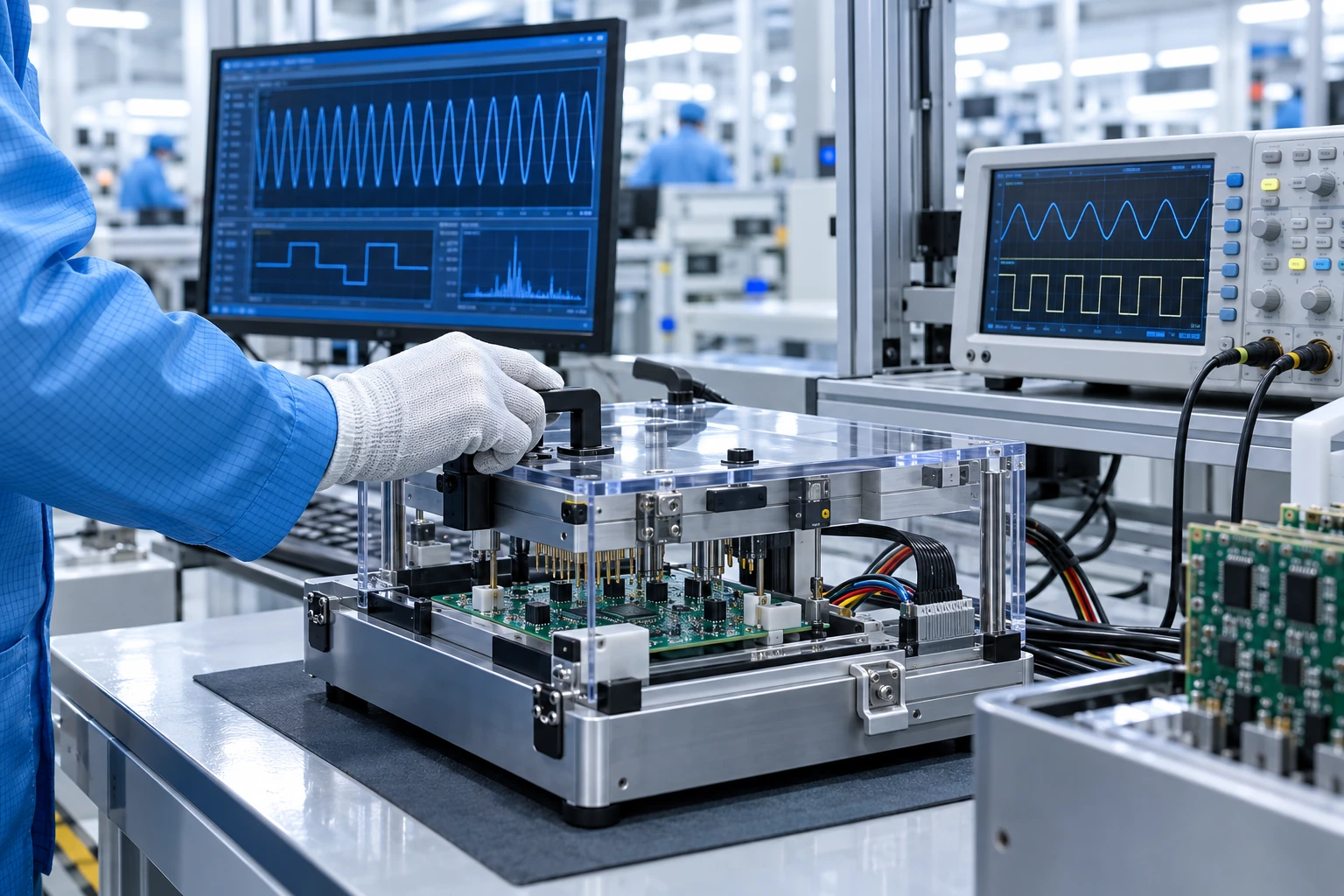
Assess performance under defined environmental conditions.
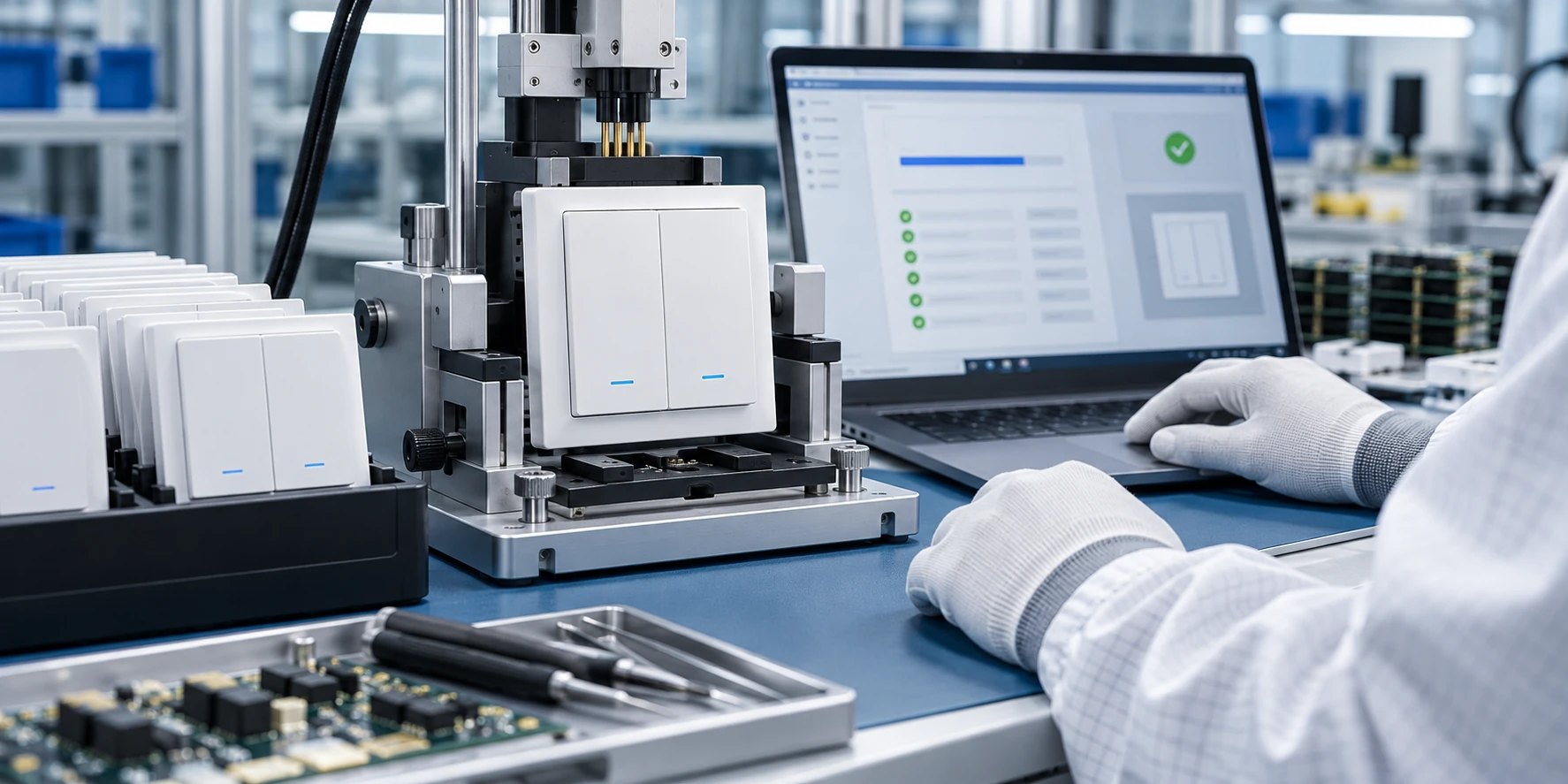
Review product recovery after interruptions or abnormal conditions.
Analyze the test records and compare them with the original test objectives.
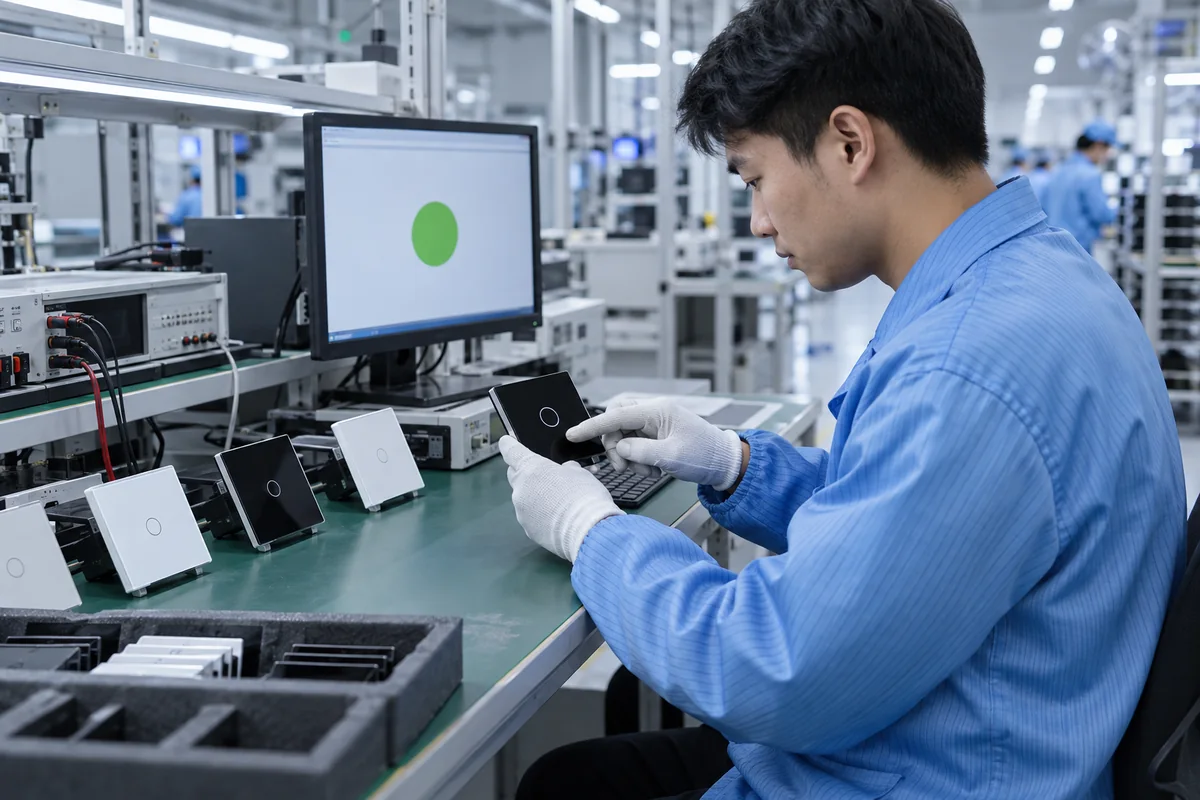
| Review area | Evidence focus |
|---|---|
| Sample identity | Confirm product model, hardware and firmware revision. |
| Method and conditions | Check test setup and environment. |
| Observations | Summarize key behaviour and findings. |
| Findings and limitations | Identify results, limitations and points for further evaluation. |
Record the test scope and limitations with the findings.
Review test records and evidence.
Compare with the test objectives.
Adjust design or test plan based on findings.
Perform additional testing when needed.
Keep the validation records together for future product reviews and updates.
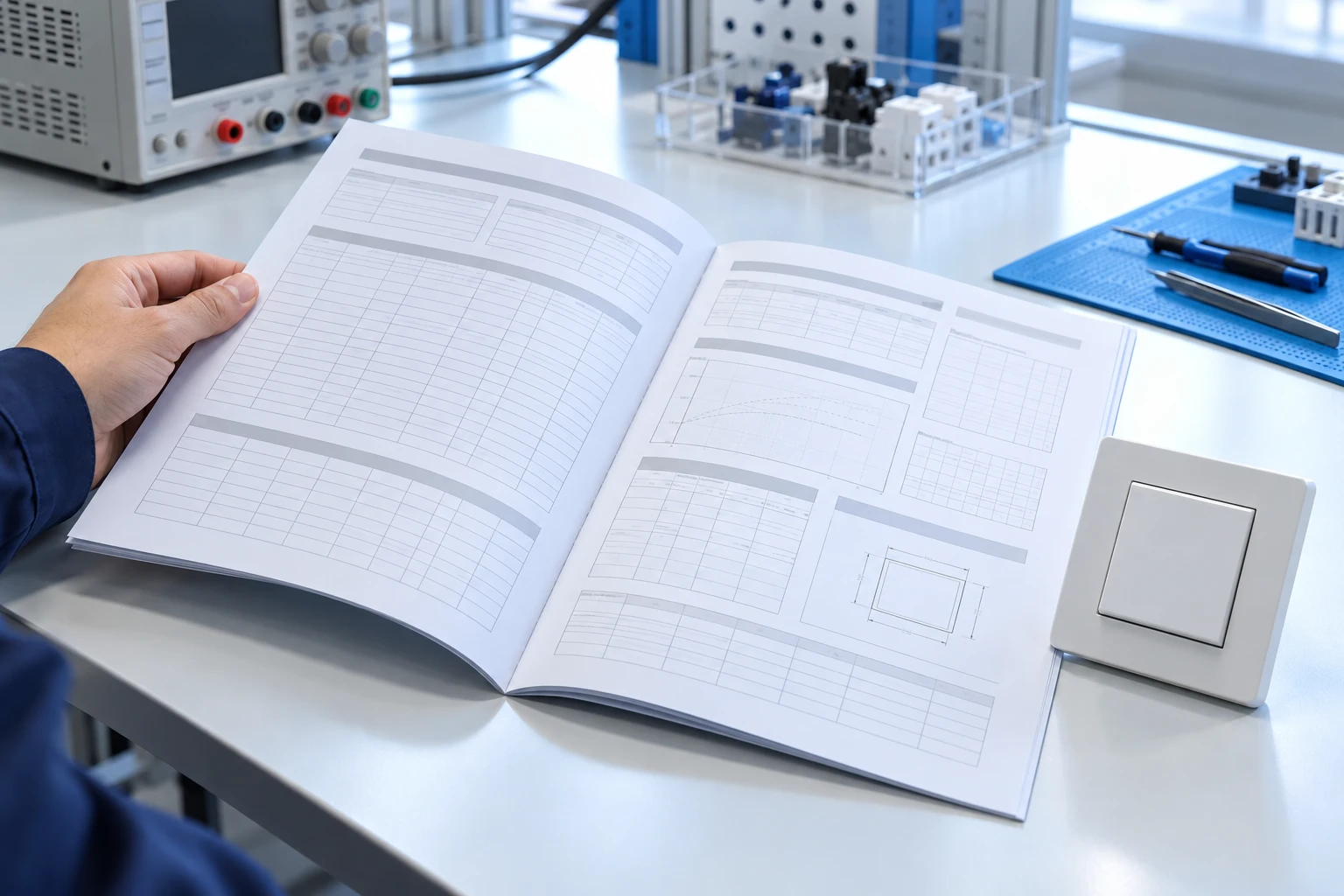
Product model, hardware and firmware version.
Test objectives, methods and conditions.
Photos, logs and key observations.
Design updates and related validation records.
Laboratory validation and certification are separate activities.
Bring the product configuration, intended use and test priorities.