

Skip to content
Hauslysmart
Illustrative image

MANUFACTURING & QUALITY

Factory Testing Traceability

Connect product and batch details with the checks performed during production.

Trace the product through its checks.

Connect the product version and batch with the checks completed during production.

The test plan depends on the product and order requirements.

1. Product and test scope

Agree which checks apply to the product and configuration being ordered.

Object / configurationTest purposeRequired conditionEvidenceScope
Product identityDefine the assigned testApproved plan / revisionPlan reference to provideModel-specific; to confirm
Aging, if applicableDefine purpose and useOperating and environmental conditionsActual record to provideNot assumed for all products
Function / electricalDefine assigned checksMethod and acceptance sourceObserved result to provideConfiguration-specific
CommunicationDefine connection and recovery checksNetwork / platform / firmware conditionsMethod and result to provideProtocol support to confirm
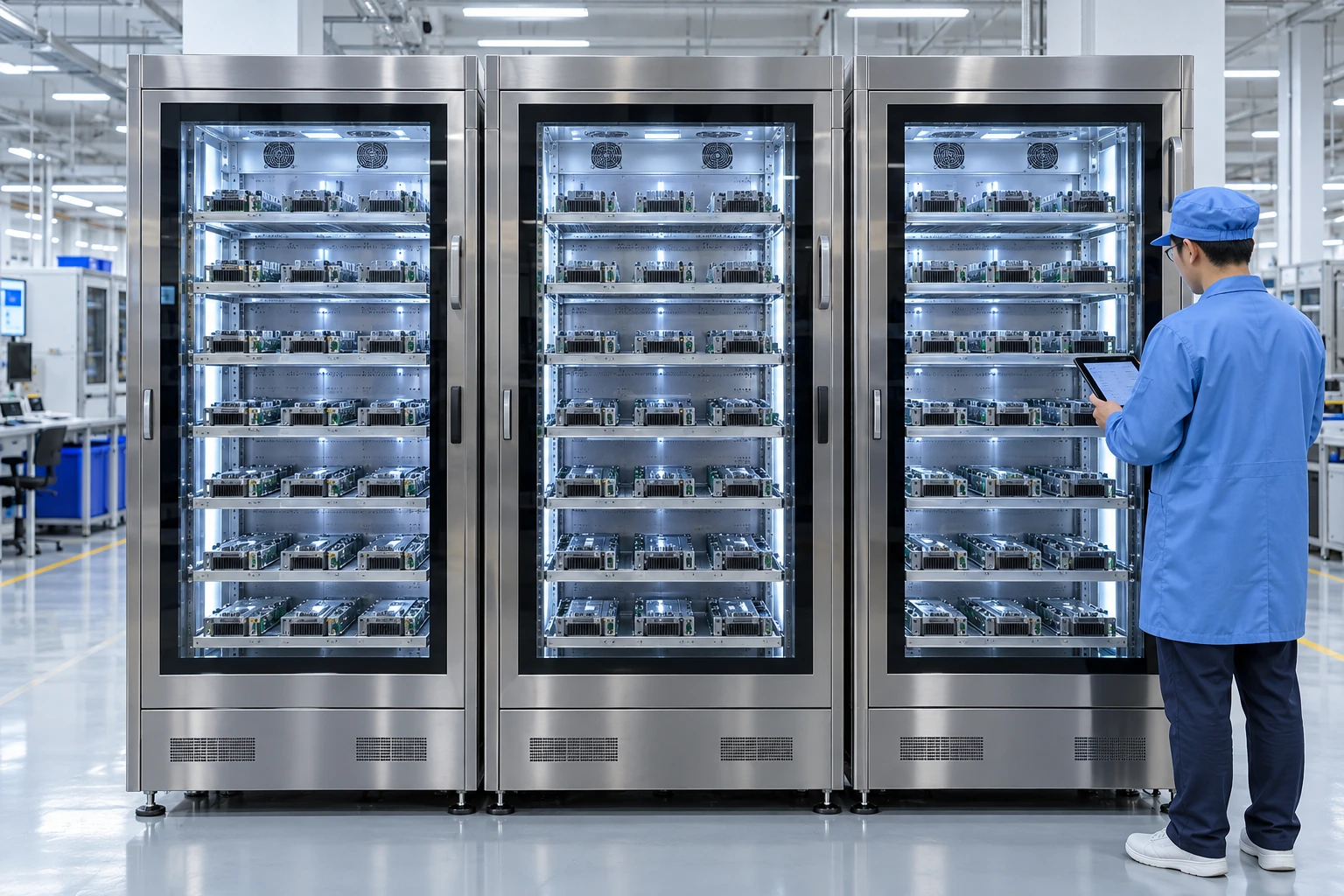
Illustrative production aging and testing
Illustrative scene

2. Main test categories

Prepare conditions, data sources and records for the applicable test categories.

Aging conditions

Define whether aging applies, and which operating conditions the approved plan requires.

What to define
Environment, duration, supply, load, monitoring and sampling rule.
Data source
Approved product plan, applicable requirement and acceptance source.
Record
Object, configuration, start / end time, observations and result reference.

Electrical and functional checks

Identify the assigned electrical and functional checks for the product configuration.

What to define
Test items, sequence, equipment / program and acceptance criteria.
Data source
Model-specific specification, test plan and approved method.
Record
Actual values with units, conditions, result and original failure record.

Communication checks

Separate connection, communication response and physical device action.

What to define
Protocol / role, pairing method, network conditions, feedback and recovery.
Data source
Approved specification and test plan for the exact firmware / configuration.
Record
Method, observed responses, recovery behavior and result reference.

3. Test conditions

Prepare questions and references. Unknown conditions remain blank; entry does not start or validate a test.

Sample or batch
Product revision
Method reference
Duration
Temperature / environment
Supply / load / mode
Acceptance criteria source / open question

4. When a product needs further review

Keep the original failure and assess the validity of the equipment and conditions before deciding the next action.

  1. Detect

    Identify and preserve the failed result.

  2. Isolate / record

    Control affected items and assess tested scope.

  3. Agree disposition

    Review cause and authorize the applicable action.

  4. Recheck requirement

    Retest the affected requirement after disposition.

  5. Record result

    Keep the original result, retest and closure reference.

5. Before release

Check the product reference, test conditions and results before release.

Object
Conditions
Result reference
Reviewer
Outstanding items

6. Discuss your test requirements

Confirm the product, applicable plan, conditions, method, sampling and result access with the responsible team.

  • Agree whether aging is needed for the product.
  • Check the device response as well as the connection.
  • Match test findings to the product and batch.
Prepare project requirements →Review laboratory evidence needs →